

Movie Seating Systems for Modern Cinemas
How Movie Seating Impacts Viewer Experience and Cinema Performance
Movie seating is one of the most influential elements in a cinema environment, directly affecting how audiences perceive comfort, quality, and overall satisfaction. While screens and sound systems often receive the most attention, seating plays a continuous role throughout the entire viewing experience. A well-designed seating system ensures that viewers remain comfortable, focused, and engaged from beginning to end.

The foundation of effective movie seating lies in ergonomics. Seat geometry must be carefully engineered to support the natural posture of the human body. Proper backrest inclination, seat depth, and foam density work together to reduce pressure points and prevent discomfort during long screenings. When these elements are optimized, viewers can sit for extended periods without distraction, allowing full immersion in the film.
Another important factor is spatial planning. The distance between rows, seat width, and overall layout define how comfortable and accessible a cinema hall feels. Insufficient spacing can create a sense of restriction, while well-planned layouts provide both personal space and ease of movement. This balance is essential for maintaining a positive user experience, especially in high-capacity auditoriums.
Material selection is critical in movie seating systems. Upholstery materials must combine durability with visual appeal. Fabrics, artificial leathers, and genuine leathers are commonly used, but their performance depends on technical properties such as wear resistance and ease of cleaning. In cinema environments, where daily usage is intense, materials must maintain their appearance and functionality over time.
Safety is another key consideration. Movie seating must comply with fire safety standards, making flame-retardant upholstery an essential requirement. These materials are designed to slow the spread of fire, increasing safety in enclosed public spaces. Compliance with such standards is not only a legal necessity but also a reflection of responsible design and manufacturing.
Durability plays a major role in long-term performance. Cinema seats are used continuously, and low-quality products can quickly deteriorate under pressure. Strong internal metal frames, reinforced connections, and high-density molded foams ensure that seating systems maintain their structure and comfort over many years. This reduces maintenance needs and helps operators control long-term costs.
In addition to structural durability, mechanism reliability is essential. Foldable seat systems must operate smoothly and quietly to maintain order and comfort within the hall. Noisy or unstable mechanisms can negatively affect the viewing experience and create operational issues. High-quality systems are designed for silent and consistent performance.
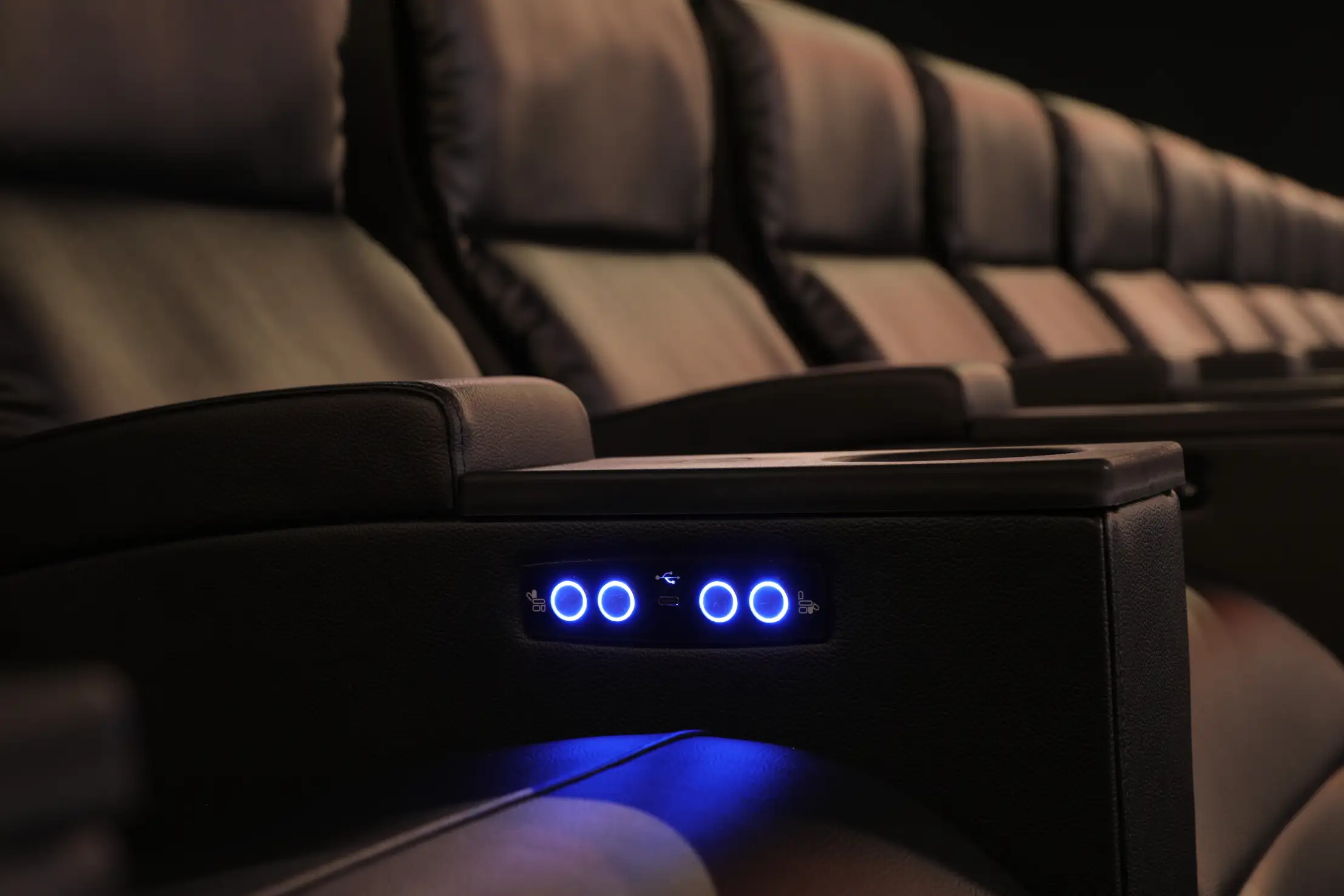
Modern movie seating also incorporates additional features that enhance usability. Cup holders, numbering systems, and integrated accessories improve convenience for both users and operators. In some cases, seating systems are designed to accommodate advanced features such as reclining functions or integrated technology, depending on the project requirements.
From a business perspective, seating directly influences cinema performance. Comfortable and well-maintained seating encourages repeat visits and strengthens customer satisfaction. On the other hand, worn or uncomfortable seats can lead to negative impressions and reduced attendance. Investing in high-quality seating is therefore not only a design decision but also a strategic one.
Maintenance efficiency is another aspect that should not be overlooked. Seating systems designed for easy cleaning and quick maintenance reduce operational workload. Materials that resist stains and surfaces that are easy to access allow cleaning teams to work more efficiently, especially in cinemas with tight scheduling between screenings.
The visual impact of movie seating contributes to the overall atmosphere of the cinema. Consistent color schemes, clean lines, and high-quality finishes create a professional and inviting environment. This visual consistency enhances the perception of quality and aligns with modern design expectations.
Ultimately, movie seating is a combination of engineering, design, and functionality. It must deliver comfort, ensure safety, and perform reliably over time. By focusing on these core principles, cinema operators can create environments that meet the expectations of modern audiences while supporting long-term operational success.
As the cinema industry continues to evolve, seating will remain a central element in shaping the overall experience. High-quality movie seating systems are not just an addition to a cinema, but a fundamental component that defines how the space is perceived and enjoyed.
Created By : Simko Cinema Seating